t-rex
Common Name: Tyrannosaurus rex
Scientific Name: Tyrannosaurus rex
Time Period: Late Cretaceous
Lived: ~68–66 million years ago
Location: Western North America (present-day United States and Canada)
Environment: Forest / Plains / Coastal
Diet: Carnivore
Length: ~12–13 meters (39–43 feet)
Height: ~4 meters (13 feet) at the hips
Estimated Weight: ~8–9 metric tons
Locomotion: Bipedal
Average Speed: ~20–25 km/h (12–15 mph), estimated
Distinguishing Features:
- Massive skull with powerful jaws
- Large, serrated teeth (up to ~30 cm / 12 inches including root)
- Extremely strong bite force
- Very small forelimbs with two fingers
- Strong tail for balance
Behavior: Likely Solitary (possibly opportunistic pack behavior)
Reproduction: Egg-laying
Fossil Evidence: Substantial (multiple well-preserved skeletons)
First Described: 1905, Henry Fairfield Osborn
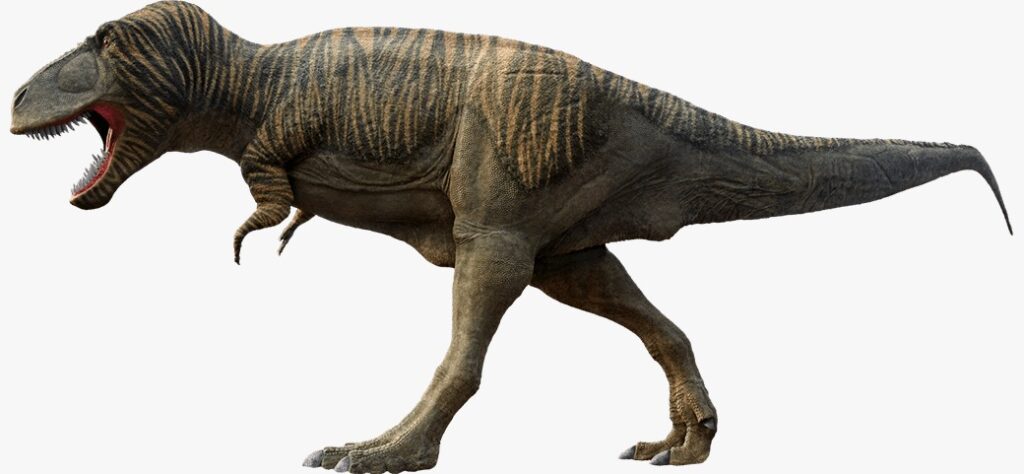
Tyrannosaurus rex
Scientific name: Tyrannosaurus rex
Meaning of name: “Tyrant lizard king”
Basic Information
- Time period: Late Cretaceous (about 68–66 million years ago)
- Location found: North America
- Diet: Carnivore
- Length: About 12–13 meters (39–43 feet)
- Height: About 4 meters (13 feet) at the hips
- Weight: Around 8,000–9,000 kilograms (17,600–19,800 pounds)
Appearance
Tyrannosaurus rex was a massive, bipedal dinosaur with a large skull, powerful jaws, and relatively small arms. It had strong legs built for walking long distances and a long tail used for balance. Its body was likely covered in scales, and juveniles may have had some feathers.
Speed and Movement
- Estimated top speed: Around 20–25 km/h (12–15 mph)
- Movement type: Bipedal
T. rex was not a fast sprinter but likely had good endurance for long pursuits.
Strength and Abilities
- Bite force: The strongest bite of any known land animal
- Special abilities: Bone-crushing jaws, strong neck muscles
Its bite was powerful enough to crush thick bones and tear large chunks of flesh.
Hunting Behavior
T. rex likely hunted large herbivorous dinosaurs and may also have scavenged when possible. It relied on its powerful bite rather than speed to kill its prey.
Defense
Its main defense was its size, strength, and powerful jaws. Adult T. rex had few natural enemies.
Behavior and Lifestyle
- Daily activity: Unknown
- Sleep habits: Unknown
Scientists believe T. rex was an active predator rather than a purely scavenging animal.
Social Behavior
- Lived alone or in groups: Likely mostly solitary
There is limited evidence suggesting it may have tolerated others of its kind in certain situations.
Predators and Threats
Adult T. rex had no known predators, but juveniles may have been threatened by other large carnivores.
Scientific Discoveries
- First discovered: 1902
- Named by: Henry Fairfield Osborn
T. rex is one of the most studied and famous dinosaurs in the world.
Myths vs Reality
- Myth: T. rex could not see you if you stood still.
- Reality: T. rex had excellent vision and would easily detect movement.
Fun Facts
- T. rex teeth could be over 30 cm (12 inches) long, including the root.
- It could swallow large chunks of meat without chewing.
Conclusion
Tyrannosaurus rex was one of the most powerful land predators to ever exist. Its strength, size, and bite force made it the true ruler of its ecosystem.
oke well now that we got that out of the way we can start honestly talking about the t-rex because comon were not all here just for some dinosaur facts are we? because yes its interesting but i feel like aload of you are here just to check it out or because t-rexes are coom